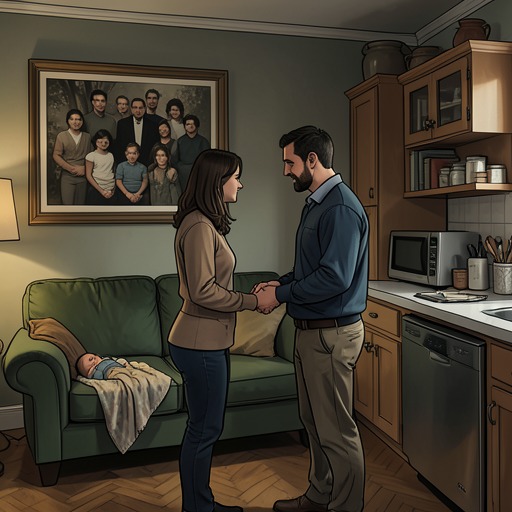
Trina and Dan’s Wedding
Always and Forever, Lara JeanDan Covey and Trina Rothschild’s wedding is both a family celebration and a passage into a changed household: the former neighbor becomes the girls’ stepmother, and the sisters take their place alongside her in the ceremony. Set in the Covey backyard in Virginia in June, the wedding gathers relatives and neighbors for an intimate celebration whose warmth is marked by one persistent absence: Lara Jean keeps looking for Peter, but he does not come.
From Neighbor to Family
By the wedding day, Trina is no longer simply the neighbor whom Kitty and Lara Jean once watched hurry to her car with hot coffee spilling on her. She is marrying their father, and Lara Jean is glad she will become their stepmother. The change is presented not as a sudden arrival but as a relationship that has taken shape through shared family life. Trina eats with the family several times a week; her laugh and glass of white wine at the kitchen table have become so familiar that the meal feels strange without her. Her presence has also drawn Dan into a more active, less lonely life: the couple go hiking before the girls wake, watch the sunrise, dine out, visit wineries, and meet Trina’s friends.
The wedding’s scale and setting suit that gradual change. The guest list is under fifty, and the ceremony takes place in the backyard, where the chairs and aisle runner turn the family home into a gathering place. The guests include relatives, neighbors, and friends. Margot sits in the front row with Grandma, Nana, and Trina’s father and sister, while Lara Jean moves among the guests to greet them. This compact gathering makes the new family bond visible in the same space where the sisters have watched Trina’s life as a neighbor begin to overlap with their own.
A Wedding Made by the Family
The preparations are busy and collaborative, with each daughter’s appearance reflecting negotiation rather than a uniform bridal-party design. Trina wears a silky ivory robe chosen by Kristen; the bridesmaids have pink robes with their names embroidered in gold. The sisters settle on vintage 1950s floral dresses instead of Lara Jean’s imagined fairy-nightgown look. Kitty wears a white short-sleeved shirt, ankle-length pants, and a plaid bow tie, her braids tucked up; Lara Jean adds baby’s breath to her hair but declines a flower crown. Their outfits preserve individual preferences while placing them together in the celebration.
The wedding also gives the sisters an active ceremonial role. When the Dixie Chicks’ “Lullaby” begins, Kitty, Margot, and Lara Jean take their places as Dan stands on the groom’s side and Trina approaches from the house. During the traditional vows, the daughters cry, including Margot, who rarely does. Reverend Choi, the pastor from Grandma’s church, pronounces the couple married; Dan turns beet red before kissing Trina with a flourish. The guests applaud, Kitty whoops, and Jamie Fox-Pickle barks. The small, specific reactions make the formal rite feel shared by the family and its gathered community.
Trina has also chosen a father-daughter dance in place of a dance with Dan. She says she has already had her turn and that it would mean more for the girls to dance with him. The sisters have rehearsed on the rented dance floor. Margot goes first, Lara Jean cuts in next, and Kitty is poised to take her turn; the song Dan chooses is Stevie Wonder’s “Isn’t She Lovely,” written for his daughter. The sequence makes the wedding a celebration of the couple and a public affirmation of Dan’s bond with all three girls.
The Absence in the Driveway
Lara Jean’s attention repeatedly returns to the driveway. Peter has not sent word, and each passing car briefly raises the possibility that he is coming. She knows he is not there and does not blame him, but she continues to hope. That tension persists as she welcomes the small group of guests and keeps watching for his black Audi. The wedding’s intimacy does not erase the absence; it gives that absence a clear place within an otherwise full family gathering.
The contrast reaches back to Lara Jean’s prom night, when she puts on Stormy’s ring and thinks of Stormy looking down, pleased that the ring is being worn for the occasion. At the wedding, a different kind of continuity is carried by the sisters’ place beside Trina and by their dance with Dan. In both celebrations, a ritual of transition holds earlier attachments close: Stormy’s ring accompanies Lara Jean into the prom, while the father-daughter dance brings the daughters into their father’s marriage. The events are distinct, but each uses a personal gesture to acknowledge that change does not cancel what came before.
A Family Photograph, and What Follows
Before the ceremony, the sisters crowd around Trina for a photograph: Margot dabs her eyes with a tissue, Kitty stands on a footstool to fuss with Trina’s hair, and Trina puts an arm around Lara Jean. The picture becomes Lara Jean’s favorite among the many taken that day. Her observation that things are ending and beginning at once gives the image its weight: the familiar arrangement of the household is changing, but the change is also becoming a source of belonging.
The wedding takes place as Lara Jean’s own life is turning toward college. On the night before she leaves, Peter and Lara Jean plan to go to the lake to watch the Perseids meteor shower. Kitty wants to come but cannot bring herself to ask; Lara Jean says goodbye without inviting her, then feels guilty in the car for being possessive of the limited time she has left with Peter. Set alongside the wedding, this departure shows the family’s transitions continuing beyond the ceremony: Dan and Trina begin married life, Lara Jean prepares to leave home, and Kitty faces being the youngest left behind. The wedding’s significance lies not in making change painless, but in showing the family gathered around one another as its roles and distances begin to shift.